Trusted Hygiene Cleaning Services
You must have routine sanitation scheduled according to potential hazards, food processing capacity, food allergen presence, and regulatory checks, plus verification documentation supporting HACCP compliance, inspection results, and government health requirements. The following sections describe critical cleaning system elements.
Key Takeaways
- Brampton food safety cleaning experts maintain restaurants, grocery departments, commissaries, warehouses, bakeries, schools, mobile vendors, and allergen-sensitive operations.
- They sanitize high-touch surfaces, food-contact equipment, kitchens, floors, drains, restrooms, and storage areas using compartmentalized approaches to eliminate cross-contamination.
- Approved sanitizer dilution, suitability, and contact time are verified by certified specialists, with finalization logged via samples, inspections, and remedial documentation.
- Maintenance timelines must respect risk, production rate, format changes, spills, and guidelines, with regular, weekly, and cyclical operations designated by area.
- Focus on vendors demonstrating HACCP, health regulatory competency, safety training training, liability, credentials, colour-coded instruments, and audit-ready sanitation files.
What Brampton Venues Require Food Safety Cleaning?
Food safety cleaning is essential for any Brampton facility that manages, stores, prepares, packages, or distributes food. Apply it to your establishment if it meets the criteria for public health inspection, food premises regulations, or internal HACCP-based controls. This includes eateries, cafes, warehouses, supermarket areas, meat markets, fish stands, convenience outlets, and institutional food areas.
You also need compliant food safety cleaning in distribution centers, food processing plants, freezer facilities, commercial bakeries, educational nutrition programs, event spaces, and catering hubs. Portable and seasonal businesses count too, including food trucks, event vendors, and temporary booths. If your staff prepare raw materials, portion finished foods, warm up meals, or maintain allergen storage, your facility needs established sanitation documentation. In Brampton, cleanliness isn't optional; it's part of lawful, functional, and customer safety adherence.
Which Areas Do Brampton Cleaning Experts Cover?
You need professional cleaners who disinfect frequently contacted areas, kitchen areas, floor surfaces, and restrooms to comply with food safety and health regulations. They focus on these spaces because they pose the greatest danger for contamination spread, slipping risks, and sanitation breaches.
When you know their cleaning scope, you can ensure your operation's cleaning procedures satisfy compliance and operational standards.
Essential High-Touch Surface Sanitizing
Brampton maintenance experts emphasize high-touch surface disinfection because these contact points can transmit bacteria, viruses, and food residue throughout a space. You require a formal plan for sanitizing door handles, push plates, switches, railings, shared equipment controls, POS terminals, and refrigerator pulls. Implementing touchpoint mapping, professionals locate every high-traffic surface and assign cleaning schedule
sample collection to check sanitization efficacy
Kitchens, Floors, and Restrooms
Professional cleaners in Brampton concentrate on kitchens, floors, and restrooms given that each location involves specific contamination control, slip-and-fall, and public health requirements. In industrial kitchens, you need degreasing on cook lines, equipment exteriors, drains, prep surfaces, and splash zones to minimize contamination and pest pressure.
Floor care that is recorded should also be anticipated. Technicians clean and remove buildup from tile grout, ceramic surfaces, and vinyl floors, then apply suitable dehydration methods so you can limit falls and meet regulatory standards. They also handle entryways where moisture and debris migrate indoors.
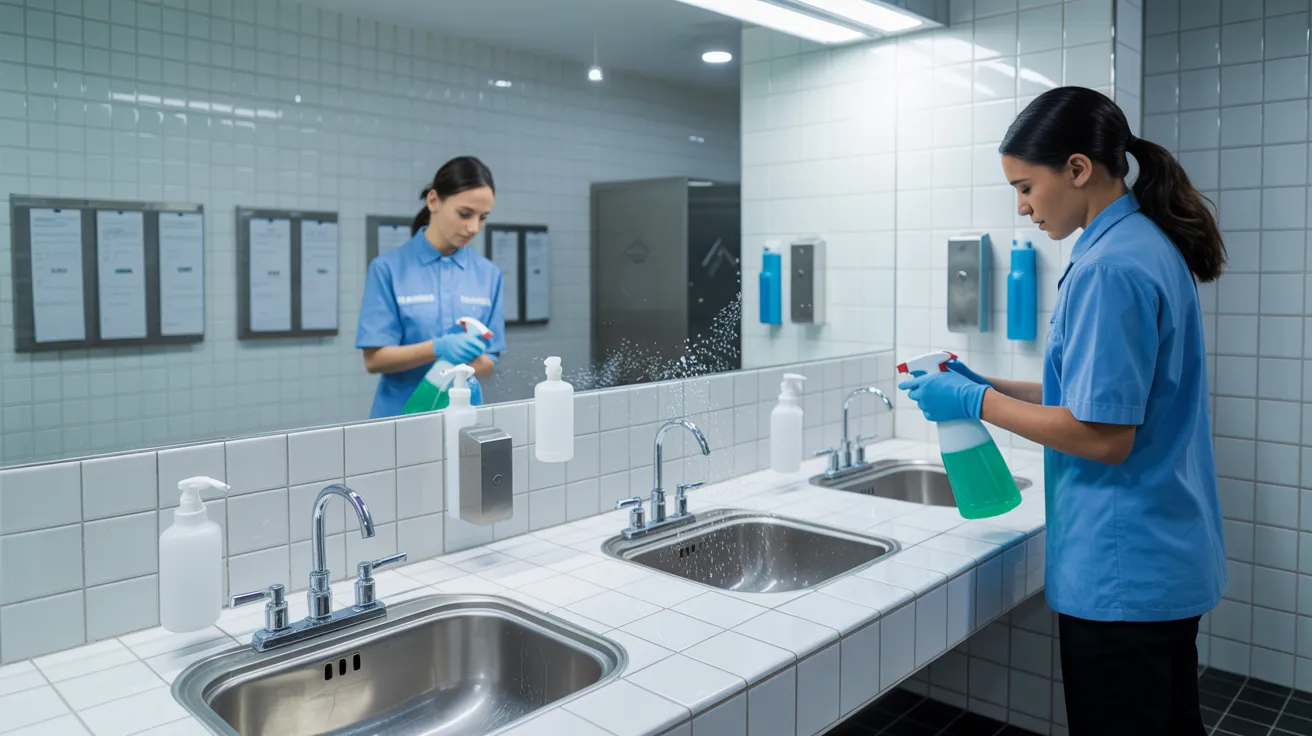
In restrooms, cleaners treat contact surfaces, bathroom hardware, partition walls, accessory dispensers, and receptacles then restock supplies and control odours. They also service restaurant moprooms, where chemical storage, sink hygiene, and drainage conditions can affect sanitation compliance and staff safety daily.
Why Food Safety Cleaning Matters in Brampton
Brampton operations demand food-safe cleaning standards to meet health code requirements and pass inspections. You also reduce cross-contamination by cleaning and sanitizing food-contact surfaces, equipment, and high-touch areas correctly. Most informative guide importantly, you help protect community wellness by reducing the chance of food poisoning in your establishment.
Health Code Compliance
Brampton food businesses must comply with strict public health standards, so cleaning procedures is vital to satisfying health codes, protecting customers, and preventing penalties. You must maintain hygienic food handling zones, documented cleaning schedules, safe chemical management, and traceable training practices that comply with municipal and provincial inspection expectations.
Retaining detailed hygiene logs shows due diligence for inspection audits and confirms that your operations are reliable, reproducible, and documented.
Cross-Contamination Prevention
Maintaining health code standards copyrights on your capacity to prevent cross-contamination during everyday food preparation and sanitation. You need to partition uncooked items from finished dishes, sanitize prep surfaces between tasks, and store chemicals away from food-contact items. Explicit protocols lower contamination threats and support consistent compliance during inspections.
Building allergen segregation prevents key allergens from reaching shared surfaces, containers, or equipment. Utilize dedicated cutting boards, color-coded tools, and strict utensil labeling so staff don't mix items during preparation or service.Enforce handwashing after handling raw meat, seafood, eggs, or allergen-containing products. Swap wiping cloths regularly, and confirm disinfectant efficacy using test strips. When you train staff to follow these controls every shift, you create a cleaner, safer operation that exceeds Brampton's safety standards consistently.
Community Health Protection
When food safety cleaning weaken, you don't only risk a failed inspection—you raise the likelihood of foodborne illness striking customers, staff, and the larger Brampton community. You also undermine your responsibility in protecting public health, especially in high-traffic food premises where contamination can spread quickly through surfaces, equipment, and touchpoints.
You must implement sanitation protocols that remove soils, effectively sanitize, and ensure effectiveness. This involves maintaining contact periods, deploying approved disinfectants, recording schedules, and coaching staff to meet compliance standards. These initiatives promote pathogen control by suppressing pathogens before contaminating food or hands. In Brampton, effective cleaning shields vulnerable populations, curtails outbreak likelihood, and proves your diligence. When you maintain standards, you go beyond regulations—you meaningfully lower danger and advance safer food handling across the region.
Why Is Cleaning Essential for Food Safety Compliance?
Prioritizing thorough cleaning protocols secures food safety compliance by decreasing contamination threats, preventing pathogen multiplication, and positioning your facility in accordance with sanitation requirements under HACCP-based programs and public health regulations. You ensure that product-contact areas appear visibly clean and microbiologically controlled, supporting documented preventive controls and inspection readiness.
Conscientious cleaning moreover enhances allergen prevention by removing residues that can provoke undeclared allergen exposure. When you integrate validated sanitation procedures with standards training, your staff can follow uniform procedures, apply approved chemicals correctly, maintain records thoroughly, and manage irregularities before they escalate. Consistent cleaning facilitates supply chain documentation, confirms corrective steps, and proves due diligence when audited. Furthermore, it aids you protect quality assurance, preserve operational compliance, and lower the risk of punitive measures, market recalls, formal complaints, and preventable public health risks.
What's the Right Time to Arrange Commercial Cleaning?
spill incidents, and following-maintenance work
Schedule drains, ventilation, storage racks, and hard-to-reach areas every week or monthly, relying on inspection findings and sanitation records.
How Do You Choose Brampton Cleaning Experts?
Evaluate providers first by sanitation compliance standards rather than price alone. You must ensure each provider understands CFIA, public health, and HACCP-aligned expectations for your business. Request proof of insurance, WHMIS compliance, staff training documentation, and supervision methods. Check technician understanding of cross-contamination risks, chemical safety, and documented sanitation practices.
You should also assess business dependability and accountability. Request references from Brampton food businesses, then examine turnaround periods, corrective-action procedures, and communication standards. Confirm the company participates in supplier audits and can present inspection-ready documentation when regulators or third parties request evidence. Check whether equipment is maintained is performed, color-coded implements are used appropriately, and facility-specific risks are recognized. A competent service protects compliance, product quality, and your brand reputation.
What does a cleaning and sanitation plan encompass?
Develop a written strategy that clarifies every sanitation responsibility, standard, and task before production begins. You should outline cleaning frequencies, approved chemicals, dilution rates, contact times, tools, and verification methods for each location, surface, and apparatus. Incorporate pre-operational inspections, corrective actions, and employee training requirements.
Your strategy should also focus on cross-contamination controls, waste handling, pest-prevention measures, and documented schedules for restrooms, drains, floors, and food-contact areas. Describe how you'll separate raw and ready-to-eat processes, support ingredient tracking, and ensure accurate allergen labeling through validated cleaning between product changes. You should set accountability, maintain signed records, and assess results against regulatory standards, HACCP controls, and customer requirements. When gaps appear, update procedures immediately and retrain staff.
Commonly Requested Inquiries
Do cleaning services work during nighttime hours at Brampton properties?
Yes, you can schedule cleaning services to accommodate overnight shifts in Brampton facilities. You'll arrange nighttime cleaning around operational schedules, security measures, and personnel needs. Providers typically map nightshift logistics to reduce disruption, ensure adherence, and document completed tasks. You should verify arrival timeframes, supervision, lockout procedures, and waste handling before service begins.
Do sanitation professionals offer hazard containment solutions?
Yes, you can locate several Brampton sanitation experts offering spill containment services. They manage hazardous materials, assess dangers, isolate zones, and execute rapid cleanup to reduce exposure and prevent disruption. You should confirm timeframes, training credentials, safety measures, and procedures. If your facility must meet standards, choose a service that logs events, follows procedures, and ensures verification.
Will green disinfectants sanitize safely surfaces contacting food?
Absolutely, eco-friendly disinfectants can be appropriate for surfaces contacting food when you choose items marked food-safe and meeting regulatory standards. You must confirm contact times, dilution ratios, and rinse protocols before use. Plant-derived products decrease harsh chemical exposure, though you require confirmation of performance against harmful bacteria. For maintaining residue free surfaces, implement manufacturer instructions exactly and validate your disinfectant complies with food sanitation requirements.
Do cleaning plans allow for seasonal production changes?
Absolutely, maintenance plans allow customization for seasonal variations. Adapt schedules, personnel, cleaning agents, and testing procedures to fit operational cycles while preserving regulatory requirements. Minimize equipment downtime through planning disinfection surrounding line changes, high demand periods, and equipment use patterns. Also revise written procedures, employee training, and facility monitoring to address periodic risks, emerging allergens, or increased soiling. Periodic assessments preserve the schedule functional.
Do commercial cleaners train staff on sanitation best practices?
Absolutely, commercial cleaners frequently provide employee education on hygiene standards. Your team gets training on correct chemical handling, dwell times, contamination avoidance, equipment disassembly, and documentation. They generally match instruction with HACCP, GMP, and CFIA or regional health authority requirements. Many conduct health inspections to ensure adherence, identify gaps, and strengthen corrective measures. This helps you maintain consistent procedures, pass inspections, and lower contamination dangers consistently.
Closing Remarks
By collaborating with Brampton food safety and commercial cleaning professionals, you aren't just organizing—you keep your operation inspection-ready and your standards in compliance. From kitchens to processing floors, every sanitized surface and maintained corner decreases contamination and avoids expensive losses. By arranging service at appropriate intervals and adhering to a systematic cleaning protocol, you protect staff members, customers, and your credibility. In a strictly regulated industry, hygienic conditions must be prioritized—they're key to business compliance.